Five Best In-home Sensory Play Tools (That You Already Have!)
For today’s guest post by pediatric occupational therapist Jamie Schreckler, OTR/L, we’ll be sharing these five best in-home sensory play tools that your pediatric clients’ parents can use in their homes, that they likely already own! If you’re an OT new to pediatric home health, you can also use these items without needing to buy more things for your pediatric toolkit. We hope all readers (parents and therapists alike) find some inspiration from these fun items!
It is common for parents of children who have been identified with sensory needs to ask their therapists, “What should I buy for home to help my child?”
The trick is, most often it’s the simplest things that can be the best sensory tools in the home, and many people already have most of these items. It is easy to get overwhelmed when you know your child needs help, and a quick fix or answer is what we look for because we are desperate to do anything for our kids! Mark buying equipment off the top priority list and try some of these things first!
Here are some ideas, however, if you are working with an OT who knows your child’s individual sensory profile, brainstorm together how and when in the day each of these tools could benefit your child the most.
Sensory HINT: It’s truly not what you have but how you are using the tools that determine how helpful they are.
1. Couch Cushions
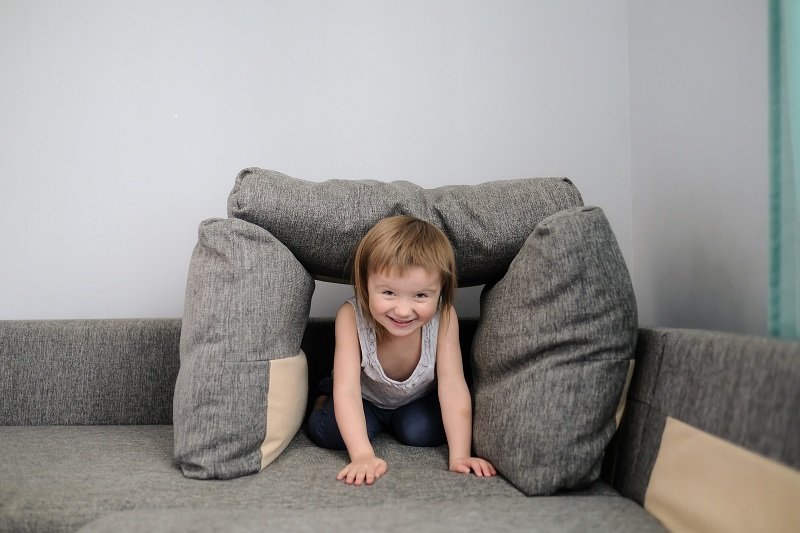
In terms of sensory equipment that you already have ready to go in your home, there is no end to the value of a couch with removable cushions. Climbing and constructing with couch cushions and pillows provides excellent proprioceptive feedback (input to muscles and joints) as well as never-ending opportunities for motor planning (planning and executing new motor sequences) practice through play.
Sensory Sidenote: Proprioceptive feedback is nourishment for the body. It is regulating and helps us feel where we are in space and in the world. Most children (and people) respond positively to input to the muscles and joints, as it is a neurological regulation tool. Climbing over surfaces of varied firmness (foam vs. hard floor) provides the body and brain the opportunity to learn how to grade use of force as well as build graded motor control.
Some fun couch cushion activities:
-
- The Volcano: Create a giant pile of cushions angled to form a mountain shape, with a child inside …or you! Count down to the explosion before the inner volcano erupts! This game provides so many opportunities for proprioception (input to muscles and joints) through building, for motor planning (creating and sequencing actions to create a new idea), and for practicing inhibition (waiting for the right moment/countdown to explode).
- The Bridge: Several cushions lined up in a long path provides a foam proprioceptive trail for younger children to practice balancing and postural adjustments. Add in themes from familiar stories, such as the Three Billy Goats Gruff, and you can work on sequencing and language.
- The Ramp: Prop cushions into a ramp shape leading up to a chair or the couch itself. Crawling up and down the ramp within a pretend play sequence or even to find puzzle pieces hidden above or below, provides extra input to the muscles and joints as well as strengthening.
- The Mountain Rescue: This one is best for older kids…unless you are prepared to be very close for physical supervision. Using the cushions to cover a staircase, then hiding stuffed animals among those pillows. Kids can climb up the makeshift mountain to rescue the stranded animals, for a great workout and a good dose of regulating proprioceptive sensation.
- Battlefield/Forts: If you have a large space for stacking cushions for walls and hide outs, an epic battle of flying stuffed animals, pillows, or other soft household items can create a fun and dynamic game for multiple children or the entire family to enjoy. Taking time to reset the stage after a battle (ended with a timer, perhaps), helps to down regulate the excitement that builds during the match.
- Sandwich: Maybe my favorite quick and easy use of the cushions is to build a sandwich of one lower cushion, a child, then the top cushion as bread. Adding “ingredients” through use of deep pressure with hands or another small pillow further enriches the calming experience and allows for creativity and engagement.
2. A Simple, Thin Blanket
It may sound obvious, but a large thin blanket or sheet at home is the key to so many fun sensory activities in the home. Depending on how it is used, a blanket is a great way to provide vestibular input (movement) as well as deep pressure (deep touch input that is regulating to the nervous system).
Sensory Sidenote: The vestibular system relates to movement. Specific types of movement can be calming or alerting. Typically, rhythmic, and slow, linear movement is calming whereas erratic, non-rhythmical movement or spinning (rotational) movement is alerting.
Some fun blanket activities:
-
- Magic Carpet: Explore positions (seated, laying on stomach, laying on back, even side lying)
- Good old-fashioned forts: Using blankets as tents over furniture to create small spaces for calming activities is a way to transform the environment into something new, inspiring pretend campouts, bear caves, and space shuttles.
- Swing: Two adults holding either end creates a perfect cuddle swing, excellent for providing rhythmic linear movement for calming and promoting eye contact and engagement!
- Burrito: Folding the blanket up lengthwise and rolling your child tightly (or loosely depending on their preferences) as a deep pressure burrito provides calming deep touch input with a bit of rhythmic movement (vestibular).
3. Cardboard Box or Laundry Basket
Either of these household multipurpose containers can be the foundation for unlimited pretend play activities, while providing opportunities for heavy work (pushing or pulling smaller sibling inside or loads of stuffed animals) as well as linear movement.
The box or basket becomes a train or Santa’s sleigh, delivering people to stations or gifts to houses. Multiple cardboard boxes can be cut and taped together for older children building a fort or tunnel.

4. Vinyl Tablecloth
Although not everyone has a vinyl tablecloth, it can be a mom’s best friend. Particularly in cold winter months with many snowy indoor days with busy toddlers. Vinyl tablecloths are waterproof and easy to clean but sturdy to use over and over for your tactile/messy play activities inside the house and out.
My favorite memories of this sensory play involve my 2-year-old in a diaper, covering himself in shaving cream and calling himself a big snowman. We have also used it for a splat mat for water/sponge play, water marbles, rice/bean bins, pretend cooking with ingredients from the pantry, and on and on.
5. Lastly, You!
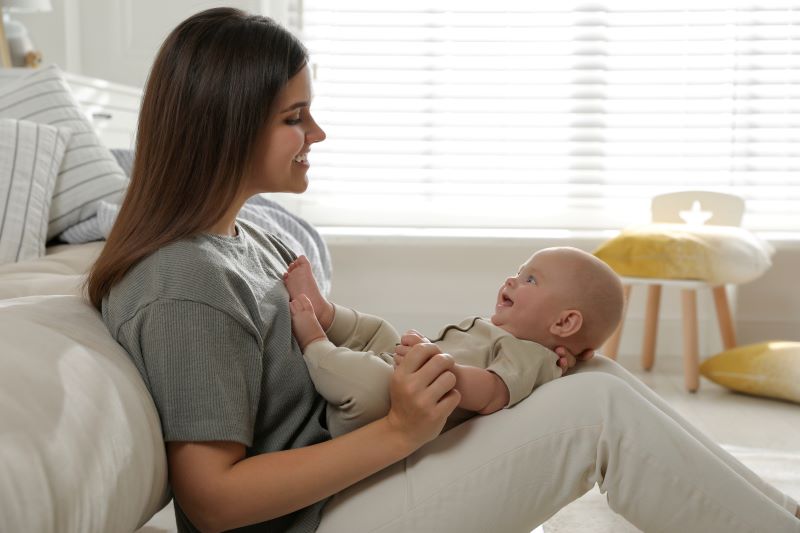
There is honestly no better play equipment available to facilitate co-regulation (supporting just right arousal state for learning and growing through attuned engagement), inspire creativity, and provide fun in a safe environment than a willing parent, caregiver, or sibling.
Even if you were in an empty room with your child, think of the endless ways you could entertain and engage each other. With all the emphasis on toys and things in our world today, sometimes we lose sight of what our kids cherish and learn from the most: time engaging with their parents.
Some fun sensory play ideas include imitation games, songs, peek a boo, hide and seek, chase, and the list goes on!
Sensory Sidenote: Sometimes children with sensory differences have difficulty participating in activities typically enjoyed by same aged peers because their nervous systems need more practice at specific developmental levels.
Talking with your occupational therapist and brainstorming where your child is with social emotional skills, can help to guide you toward meeting your child where they are developmentally during play. This is where learning takes place!